
American Takeover of Cuba Will Be the End of Luxury Cigars
A US takeover of Cuba is looking more likely than it has for a long time. This will of course impact the cigar industry, and it is unlikely to be a positive one. This piece looks at the cigar industry specifically, without getting into the politics or the morality of the broader conversation.
Cuban cigars would still exist. The tobacco would still grow, the island would still produce, the boxes would still ship. Whether they would still exist as a luxury product is another matter entirely, and there is enough evidence to suggest they would not.
What is Luxury?
Luxury is one of those words that gets used often but rarely is it properly understood. Expensive is not luxury. Premium is not luxury.
The academic study of luxury, developed most thoroughly by French marketing scholar Jean-Noël Kapferer, identifies a consistent set of characteristics that define a genuinely luxury product. Heritage and provenance. A cultural identity inseparable from the product itself. Scarcity and controlled distribution. A price that goes well beyond the functional value of the object. And a social dimension, the sense that owning the product places you within a particular world. A premium product competes on quality and price. It can be improved, replicated, scaled. A luxury product cannot be scaled without ceasing to be luxury, because the intangibles that define it cannot be manufactured or transferred. Raising the price of a premium product does not make it luxury. The intangibles either exist or they do not.
It’s for these reasons that Cuban cigars can be classified as luxury. The tobacco is grown on a geography and climate that that is not only unique, but inherently limited. There are only so many Cuban cigars that can be produced per year and each year it varies due to several factors.
Additionally, the production has remained largely craft-based, with hand rolling a defining characteristic. The cultural identity is also significant because a Cuban cigar is not just a cigar made in Cuba, it is the product of a specific history, a specific place, and a specific way of doing thing.
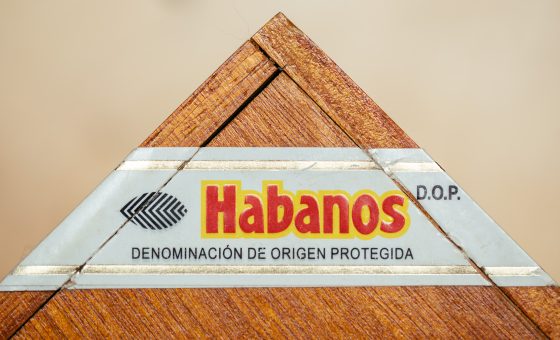
Cuban cigars have the quality and the craftsmanship, and beyond that, several of Cuba’s key growing regions hold Denomination of Origin protection, the same status given to Champagne or Parmigiano-Reggiano. It is an official recognition that the product can only come from one place, which is exactly what luxury is.
Americans Don’t Understand Luxury
Specifically American industry. There are of course Americans with sophisticated tastes, deep knowledge, and a genuine appreciation for quality in every sense of the word. This isn’t about individuals, instead it is about American industry, which operates by a different logic entirely.
Jean-Noël Kapferer, whose work on luxury is the most rigorous academic framework on the subject, makes a specific observation about the United States. The concept of exclusivity sits uncomfortably with American cultural values. A country built on the premise that anyone can have anything is not naturally suited to an industry whose entire logic depends on the opposite, and the evidence for that shows up across multiple industries in the same way.
The Food Industry
The American food industry is a good example of how this logic plays out in practice. The system runs on a regulatory loophole called GRAS, Generally Recognised as Safe, which allows food manufacturers to declare their own ingredients safe without FDA review, approval, or even notification. More than 10,000 chemicals are allowed in the US food supply, and nearly 99% of those introduced since 2000 were approved by the food and chemical industry, not the FDA. A Pew Charitable Trusts study found that not one of 451 voluntary safety notifications submitted between 1997 and 2012 used an independent third-party expert panel. Every determination involved either the manufacturer’s own employees or experts selected and paid by the manufacturer. The EU, Canada, Japan, and Australia all require independent pre-market approval before any ingredient enters the food supply.
Effectively the food supply is 73% ultra processed and contains ingredients banned everywhere else. Potassium bromate, used in bread, is linked to cancer and banned in the EU, Canada, China, and Japan, but legal in the US. Titanium dioxide was banned by the European Food Safety Authority in 2022 after studies found it could damage DNA. Still legal in the US. BHA, used to extend the shelf life of cereals and snack foods, has been classified by the US National Toxicology Program as reasonably anticipated to be a human carcinogen. Banned in the EU.
What’s worse is that many of these products were deliberately engineered for addiction. This is an industry that has had every opportunity to prioritise quality and has consistently chosen not to. That is the pattern worth paying attention to when considering what American industry would do with Cuban cigars.
Agriculture
American agriculture follows the same pattern. A peer-reviewed study published in Environmental Health identified 72 pesticides approved for use in the US that are banned or being phased out in the EU. Of the 1.2 billion pounds of pesticides used in US farming in 2016, 322 million pounds were of pesticides banned in Europe, accounting for more than a quarter of all agricultural pesticide use in the country. The farming model is built around yield and consolidation, not soil health or product quality.
The nutritional content of American-grown fruit and vegetables has declined measurably over the past 50 years, with documented reductions in protein, calcium, phosphorus, iron, and vitamin C.
This connects directly to the cigar argument. Cuban tobacco farming is craft agriculture. It depends on specific soil, specific seed varieties, and generational knowledge of how to work a particular piece of land at a deliberately limited scale. American industrial agriculture applies the opposite logic to every crop it touches, and there is no reason to think its impact on Cuban tobacco would be any different.
The Beauty Industry
Cosmetics follows the same regulatory pattern as food. The EU has banned or restricted over 1,700 ingredients from cosmetics. The US FDA has banned 11. There is no requirement for pre-market safety testing. Companies self-certify ingredient safety and are not legally required to report adverse effects to the FDA. Formaldehyde, a known carcinogen, restricted across Europe, remained in widespread use in American products until individual states began banning it independently. PFAS, chemicals linked to cancer, endocrine disruption, and reproductive harm, are banned from cosmetics in France, New Zealand, and much of Europe. The FDA published a safety review in December 2025 and concluded it could not fully assess the risk because the toxicological data was incomplete. No federal ban followed. Eight US states have now enacted their own bans because federal regulation has not moved.
Three industries. The same outcome every time. Self-regulation in place of independent oversight. Volume over quality. Profit over craft. Ingredients and practices banned across much of the developed world remaining legal because the regulatory burden sits with government to prove harm rather than with industry to prove safety. This is not a series of isolated failures. It is a consistent operating logic, and it applies to everything American industry touches.
American Industry Is Already in Cigars
None of this is hypothetical. The behaviour is already present in the cigar world, and it follows the same logic as everything described above.
The Lieberman is the clearest example. It is a manually operated machine that performs the bunching stage of cigar making, the part where the filler and binder are rolled together to form the core of the cigar. Tools are used throughout cigar making and that alone is not the issue. A cigar mould, for instance, shapes and presses a bunch that a person has already formed by hand, it assists a skilled process without replacing it. The Lieberman is different. Bunching done by hand is one of the more skilled stages of the entire process, and the method used directly affects how the cigar draws and burns.
The Lieberman removes that skill and produces a uniform bunch every time, faster than a roller working by hand, and it requires almost no expertise to operate. A cigar bunched on a Lieberman and a cigar bunched entirely by hand are not the same product. Yet cigars made this way are routinely sold as premium and described in language that implies full hand craftsmanship, with no clear distinction made for the consumer. The buyer assumes a level of skill and labour that is not actually there. Comparing a Lieberman-made cigar to a fully hand-made one as though they are equivalent is not a fair comparison, because they are not equivalent products.
Infused tobacco is the next example. Some cigars are flavoured or chemically altered during production, and there are brands selling exactly this while denying that any infusion has taken place, even though people who genuinely understand tobacco can identify it immediately. The product is one thing, but the marketing insists it is something else.
Then there is the use of Cuban identity itself. There are brands that lean on Cuban language, Cuban imagery, and the idea of Cuban heritage to sell a product, while in the same breath working to undermine the reputation of actual Cuban cigars. The association is invoked when it helps the sale and disparaged when it does not. The heritage is treated as a marketing asset to be borrowed rather than something real that belongs to a specific place.
None of this requires a takeover to exist. It is already here. The significance of an American takeover of Cuba is not that it would introduce this behaviour to the cigar world, it is that it would bring it to the one place that has so far been protected from it.
Final Thoughts
A US takeover of Cuba would not be the end of Cuban cigars. What it would end is the thing that makes Cuban cigars the only real luxury in the cigar industry.
Luxury depends on conditions that cannot be manufactured or moved somewhere else. Heritage, provenance, controlled production, a cultural identity tied to one specific place, and scarcity that is real rather than engineered. Cuban cigars have all of it and American industry does not preserve those things.
It is what has happened in the food industry, agriculture, cosmetics, and it is already visible in the cigar world. The pattern is consistent. Scale, consolidation, cost-cutting, and volume, with quality treated as negotiable.
Apply this to Cuba and the result is not hard to predict. Production scaled up to meet demand instead of held back to protect quality. Hand craft quietly replaced by machinery. Heritage used as marketing rather than an actual reality.
Cuban cigars will still exist. They will probably still be expensive, and some of them may even be good. But expensive is not luxury, and good is not luxury. The Denomination of Origin would likely stay on the label because it sells, but the system that gives it meaning would not survive, and that is the part that cannot be undone.

Comments
No comments yet

Leave a comment