The Fake Cuban Cigar Problem Is Bigger Than You Think
In July 2026, the Spanish Guardia Civil dismantled an organised counterfeiting network in Mislata, on the outskirts of Valencia. In an ordinary apartment, counterfeiters were receiving cigars, fitting them with 637,646 bands imitating major brands such as Cohiba, Montecristo and Punch, and shipping them to several European countries. In total, 33,840 counterfeit cigars were seized. Three people were arrested and four others are under investigation.
The operation is not an isolated case. It reflects a worldwide phenomenon that is organised, widespread, and consistently underestimated by consumers.
Why Cuban Cigars Are the Target of Choice
The Cuban cigar occupies a unique position in the world of tobacco. It is the gold standard, the absolute benchmark for a large part of enthusiasts around the world, and that reputation has been built over centuries of history, craftsmanship and a unique terroir. It is precisely that status that makes it the counterfeiter’s preferred target.
In this respect, the Habano shares the same fate as other icons of global luxury. The Louis Vuitton bag, the Rolex watch, the Chanel perfume bottle: the more desirable and recognisable a brand, the more it attracts counterfeiters. The logic is identical. What is different in the case of the Cuban cigar is that the counterfeit is all the more dangerous because it is difficult to detect for the uninitiated, and because the product is consumed.
Global demand for Habanos structurally exceeds supply. Cuba cannot produce enough quality cigars to satisfy a constantly growing market, and that tension between scarcity and desire creates exactly the conditions in which counterfeiting thrives. Add to that the continuous rise in Cuban cigar prices in recent years, which pushes some consumers to look for cheaper alternatives, sometimes without questioning their authenticity.
For a counterfeiter, the equation is straightforward: a box of 25 Cohiba Esplendidos in the official network can exceed 3,000 euros. A box of poor-quality cigars fitted with imitation bands costing a few cents each can be sold for almost the same price to an unsuspecting buyer. The margin is considerable, the perceived risk is low, and the demand is there.
The counterfeiter’s favourite hunting ground is often the most obvious one: the street. The tourist visiting Havana who is approached by a stranger offering a box of Cohiba that “fell off a truck” or came via a cousin’s husband who works in a factory is a classic of the genre. In the shop, we regularly see customers boasting about having struck the deal of the century by buying a box of Cohiba for fifty euros on the street. It is rarely the deal of the century. It is almost always a fake.
And the phenomenon is not limited to Cuba: I have seen with my own eyes fake Cuban cigars sold in hotel souvenir shops in the Bahamas, or at the markets of Chichen Itza in Mexico. The geography of counterfeiting is far wider than most people imagine.
How It Works
The Mislata case illustrates perfectly the mechanics of organised counterfeiting. But to understand how fake Cuban cigars reach the market, you have to look at the counterfeiter’s essential raw material: the authentication elements themselves.
In November 2025, Cuban customs authorities intercepted more than 26,000 counterfeit stamps imitating several internationally recognised brands at José Martí International Airport in Havana. The stamps had been shipped in from the United States and were intended to legitimise cigars for illegal sale inside Cuba. Fake authentication elements like these are what make the whole trade possible: applied to lower-quality cigars, they transform an anonymous product into something that can pass for the real thing.
In Mislata, the operation was well established. Unidentified cigars were received in an ordinary apartment. Counterfeit bands were applied, the cigars were packaged, and they were shipped to various European countries under several different commercial names to cover the tracks. The machinery needed for manufacturing and packaging was on site. Everything happened in a private space, with no licence and no traceability.
This is not an artisanal operation. The charges brought against the suspects, smuggling, infringement of industrial property rights, membership of a criminal organisation, say a great deal about the structure of the network. These are not amateurs looking to make ends meet. This is a supply chain.
The Real Risks
Counterfeiting is not just a matter of money lost. It carries real risks that the buyer rarely appreciates.
The first is a health risk. A genuine Habano is produced under strict controls, using tobacco leaves that are selected, fermented and aged according to codified processes. A counterfeit cigar can contain almost anything: off-cuts, production waste swept from factory floors, or materials that have nothing to do with tobacco at all. Banana leaves have been used as a cheap substitute to simulate the filler of a cigar. Some counterfeiters also use glue to give the filler consistency and replicate the feel of a properly rolled cigar. What you are actually smoking, nobody knows.
The second risk is financial, and it can be significant. Knowledgeable enthusiasts, convinced they were getting a good deal, have built up stocks of cigars purchased outside the official network for substantial sums, hoping to see them appreciate in value. Some have ended up with entire collections of fakes and no recourse whatsoever. Reselling counterfeit cigars, even those acquired in good faith, can expose the seller to criminal prosecution.
The third risk is more diffuse but equally real: every fake cigar purchased finances a criminal network and deprives legitimate brands, Cuban factories and their workers of revenues that rightfully belong to them.
How to Spot a Fake
There is no foolproof method, particularly given increasingly sophisticated counterfeits. But after years in the industry, I have learned to read certain signals.
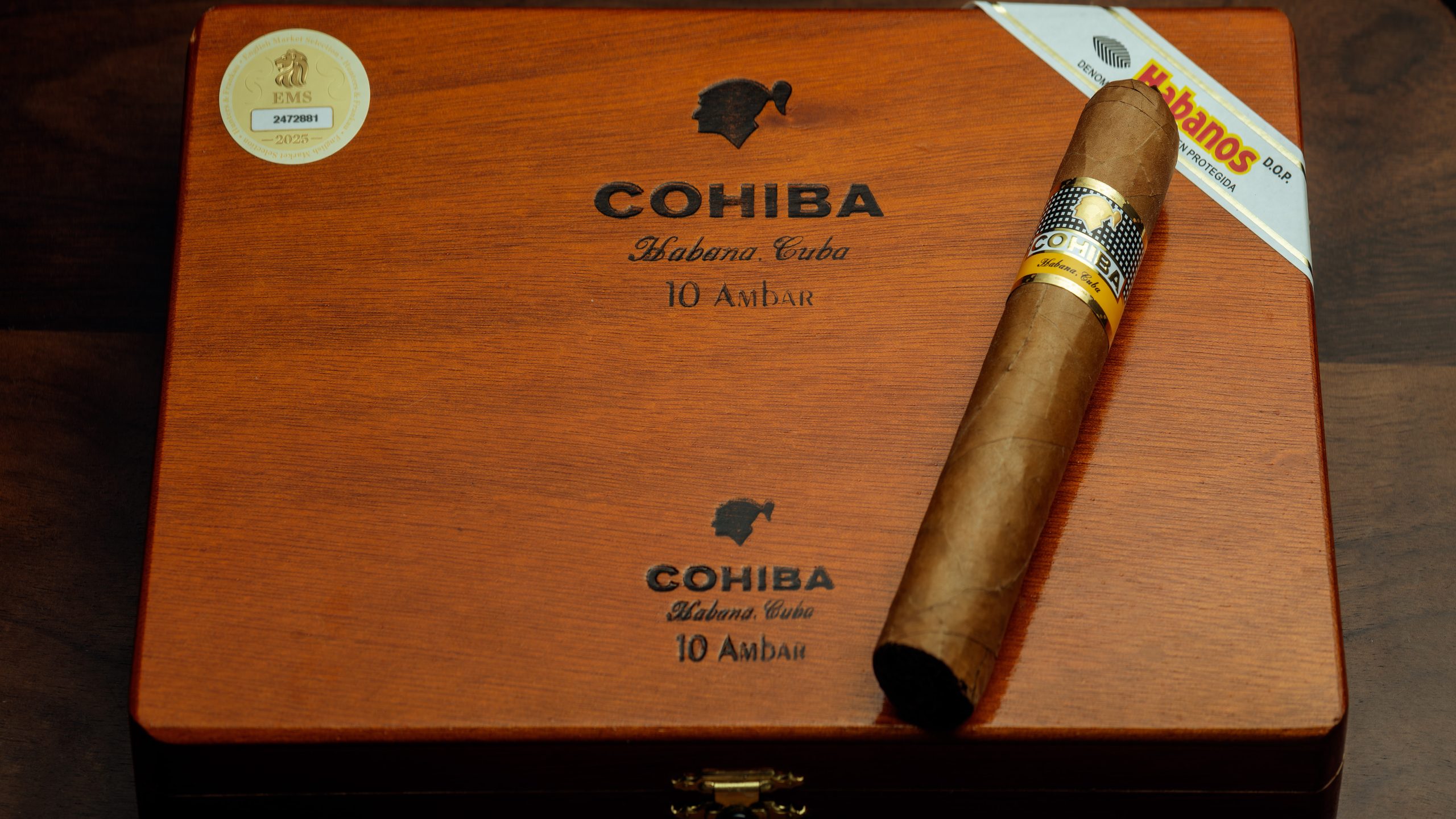
The box is the first point of control. An authentic Habanos box carries a Cuban guarantee seal on the left side of the lid, with a hologram and a unique barcode registered in the Habanos S.A. database. The seal is designed to self-destruct on opening: it cannot be removed intact and reapplied to another box. The Habanos S.A. website allows you to verify the authenticity of a code directly online. The bottom of the box also carries mandatory inscriptions: “Hecho en Cuba”, “Totalmente a mano” for long-filler cigars rolled entirely by hand, and “Habanos S.A.”, along with a code indicating the factory of origin and the production date. Their absence or poor reproduction is an immediate red flag.
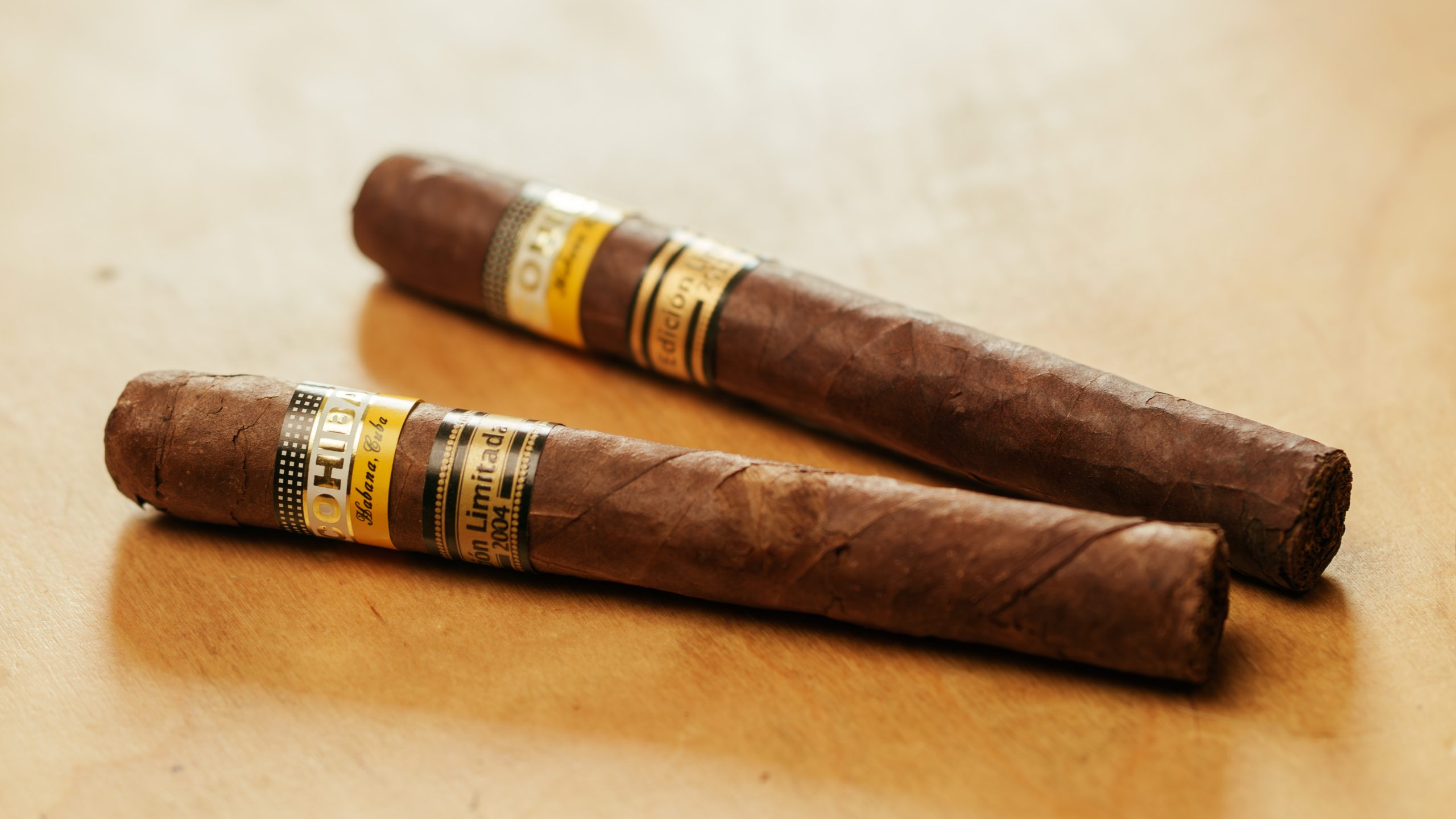
The bands deserve particular attention. They are produced to specifications worthy of banknotes, with embossed printing elements, precise colours and fine details that are extremely difficult to reproduce faithfully. A dull band, without embossing, with slightly off colours or imprecise edges should raise the alarm immediately.
The cigar itself also tells a story. The consistency of the wrapper, the uniformity of colour between cigars in the same box, the even firmness of the filler: a cigar that is too soft or collapses under pressure is suspect. When smoking, the ash of a genuine Habano tends towards grey, sometimes with a salt-and-pepper appearance. A bright white ash is often a sign of non-Cuban tobacco.
And then there is the price, the most obvious signal and the most consistently ignored. A Cohiba Esplendido sold for fifty euros on a street in Havana is not a bargain. It is a fake. The official prices of Habanos are well known and documented. Any significant downward deviation should be treated as a warning, not an opportunity.
The Golden Rule
All of the above checks are useful. None of them is foolproof. An experienced counterfeiter can reproduce a convincing seal, take care with the packaging, and present a box that holds up to a superficial examination. The only truly reliable protection remains the simplest one: buy exclusively from an authorised retailer.
An official retailer, whether a Casa del Habano, a distributor authorised by Habanos S.A., or a recognised specialist store, sources its stock through the official chain and stakes its reputation on every box it sells. It is not an absolute guarantee against every human error, but it is the only approach that reduces the risk to an acceptable level.
In the shop, we regularly see customers arrive with cigars bought outside the official network, convinced they have found a bargain. The verdict is rarely the one they were hoping for. And unlike a counterfeit watch that can be put away in a drawer, a fake cigar is smoked. What it actually contains, nobody knows.