Most Premium Cigars Are Not Actually Handmade
Premium cigars rolled with the help of a Lieberman bunching machine are sold as handmade across most of the market outside Cuba, and the industry has never properly defined where the line between handmade and machine assisted sits.
The Lieberman is a hand cranked bunching machine, patented in 1919 by Bernard Lieberman of Philadelphia. It uses a lever, a steel frame, and a rubber mat to wrap the binder around the filler and compress the tobacco into a bunch.
The Lieberman is used practically everywhere across Nicaragua, Honduras, and the Dominican Republic, and is not used in Cuba. The wrapper, the cap, and the finishing are still done by hand, which is what manufacturers point to when they defend the handmade designation.
What Handmade Means
The common understanding of handmade is made by hand, not by machine. Hand tools sit inside that definition because they extend the hand without doing the work themselves. A chaveta, a knife, a pair of scissors, a needle, these are tools a craftsman uses to apply their own skill and force. Nobody would call a knife or a chaveta a machine. A Lieberman is called a machine by the industry that sells it, by the trade that operates it, and by its own patent. That is not an accident of language. It is a different category, even when a hand operates it, because the mechanical action is happening in the device rather than in the hand.
The video below shows the machine in operation.
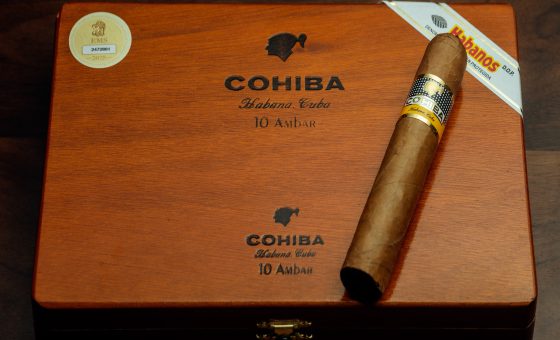
Most premium cigar boxes carry Hecho a Mano, or a handmade designation in some form, printed on the box or the band. On the common understanding of what handmade means, a cigar whose bunch was formed by a Lieberman does not sit inside that description. The bunch was not made by a hand. It was made by a machine that a hand operated.
The point holds even at the smaller scale of a cigarette. People who roll their own cigarettes do not consider a machine rolled cigarette to be handmade, even though the tobacco was still loaded by hand and the paper was still placed by hand. The mechanical action of the roller is enough to disqualify it. If that line holds for a cigarette, where the skill involved is a fraction of what a cigar buncher does, it holds far more strongly for a cigar.
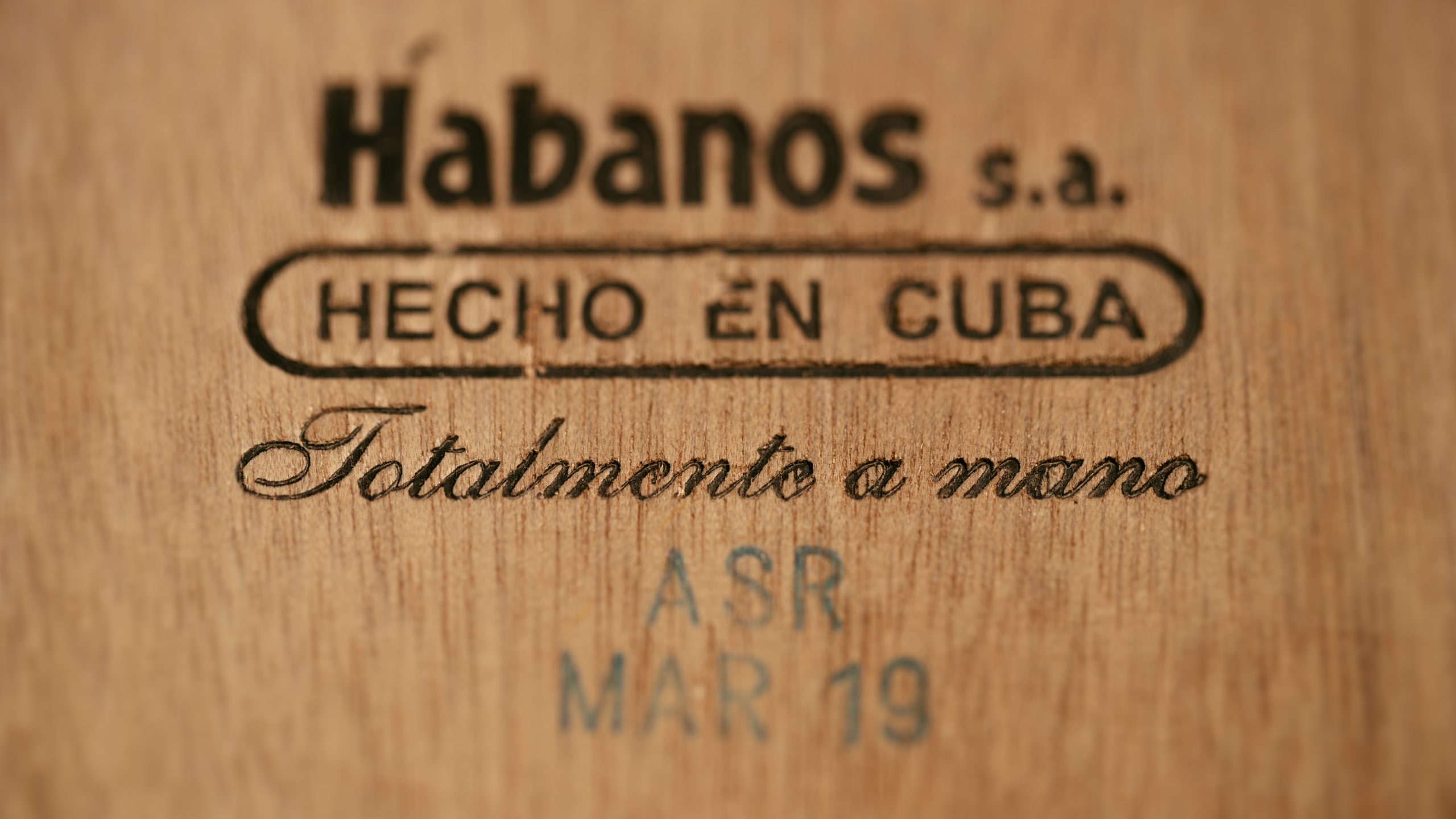
Cuba draws the line differently. Cuban boxes go further and say Totalmente a Mano, totally by hand, and that stronger term only exists because Hecho a Mano is not the same as fully handmade. If the two phrases meant the same thing, there would be no reason for the second one.
The industry uses a single label for two different things, and the box tells you which is which if you know what to read.
Why Manufacturers Use It
At least one manufacturer has stated, in private, that the reason for using a Lieberman is the difficulty of finding and retaining rollers skilled enough to bunch consistently by hand. It is framed as an industry wide problem rather than a single factory problem, and taken at face value, the point has real weight. Skilled bunchers are genuinely hard to find.
Full hand bunching takes years to teach. New bunchers start on the simpler sizes and progress over time to more complex and harder to roll cigars, with the most demanding formats reserved for the most experienced pairs. Consistency in bunch density, filler distribution, and draw only comes with sustained practice, and reaching a reliable production standard takes years. Losing a trained buncher is expensive and slow to replace, and every factory in the industry knows it.
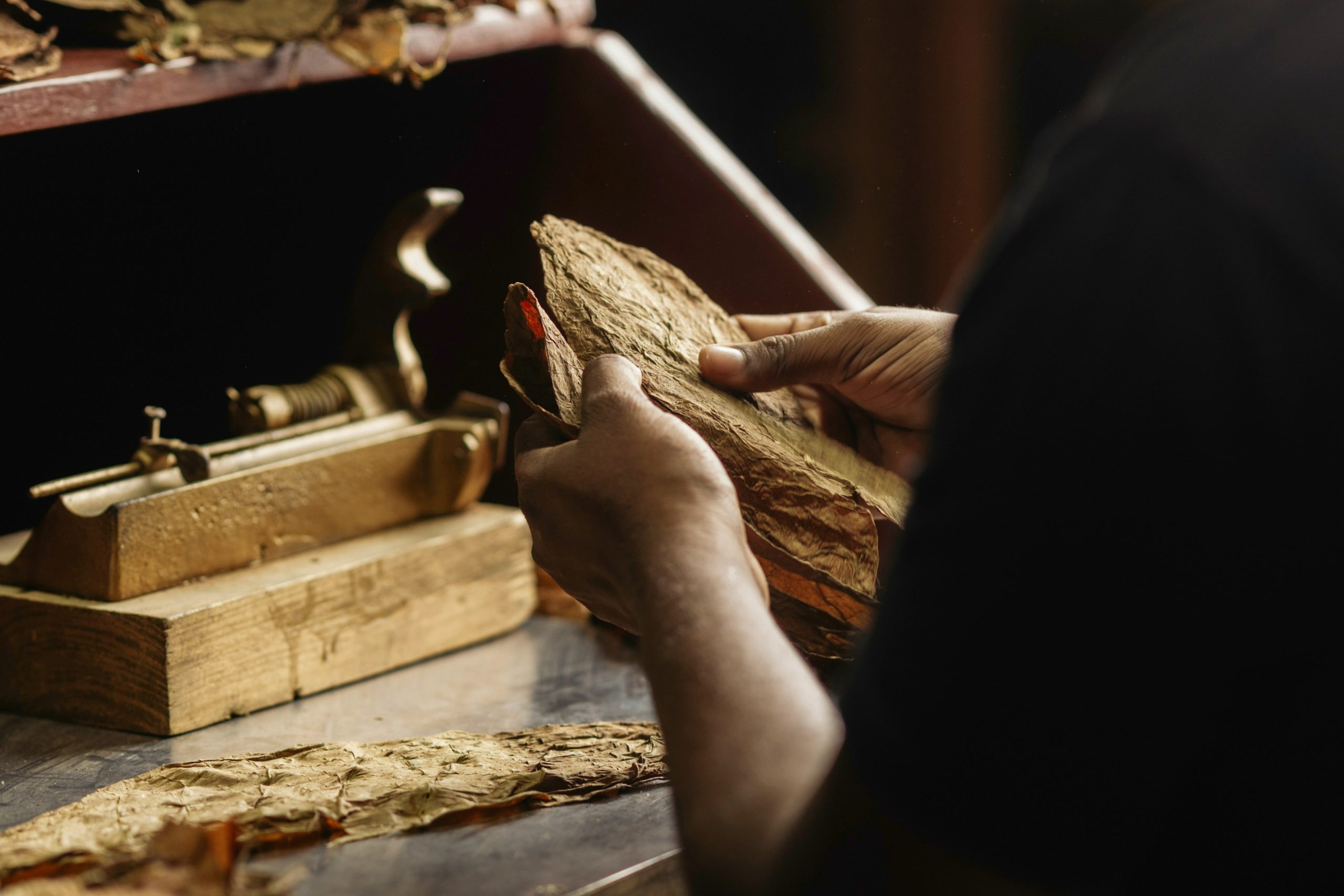
The cost side follows from that. Training a buncher to a full hand bunching standard is a long term investment. A factory carries years of lower productivity from apprentices before those workers reach a production standard, and there is no shortcut to the experience the role demands. A Lieberman compresses the learning curve. It allows a less experienced worker to produce a bunch of consistent compression and ring gauge, which raises output and reduces the reject rate at quality control.
The output difference is significant. Buncher and roller pairs using a Lieberman produce far more cigars per day than a Cuban torcedor working alone, who bunches and rolls the entire cigar by hand, and may average around a hundred and thirty cigars a day. Higher output per pair, lower unit cost, and a lower retail price for the consumer. On its own terms, this is a rational commercial decision.
The problem is not the use of the machine. The problem is the label on the box. Selling a Lieberman bunched cigar as handmade lets the manufacturer keep the cost savings of the machine and charge the price premium of a fully handmade product at the same time. The consumer pays for a category the cigar does not sit in, on the strength of a designation the manufacturer will not qualify. Using a Lieberman is a defensible commercial decision. Selling the result as handmade without qualification is not.
Why Cigar Moulds Are Not the Same
There is a fair question here. If a Lieberman disqualifies a cigar from being handmade, why does a mould not do the same? Both apply compression to the tobacco, both are tools the buncher uses, and every serious cigar making country uses moulds. The answer sits in skill, and it is the same skill argument the previous section rests on.
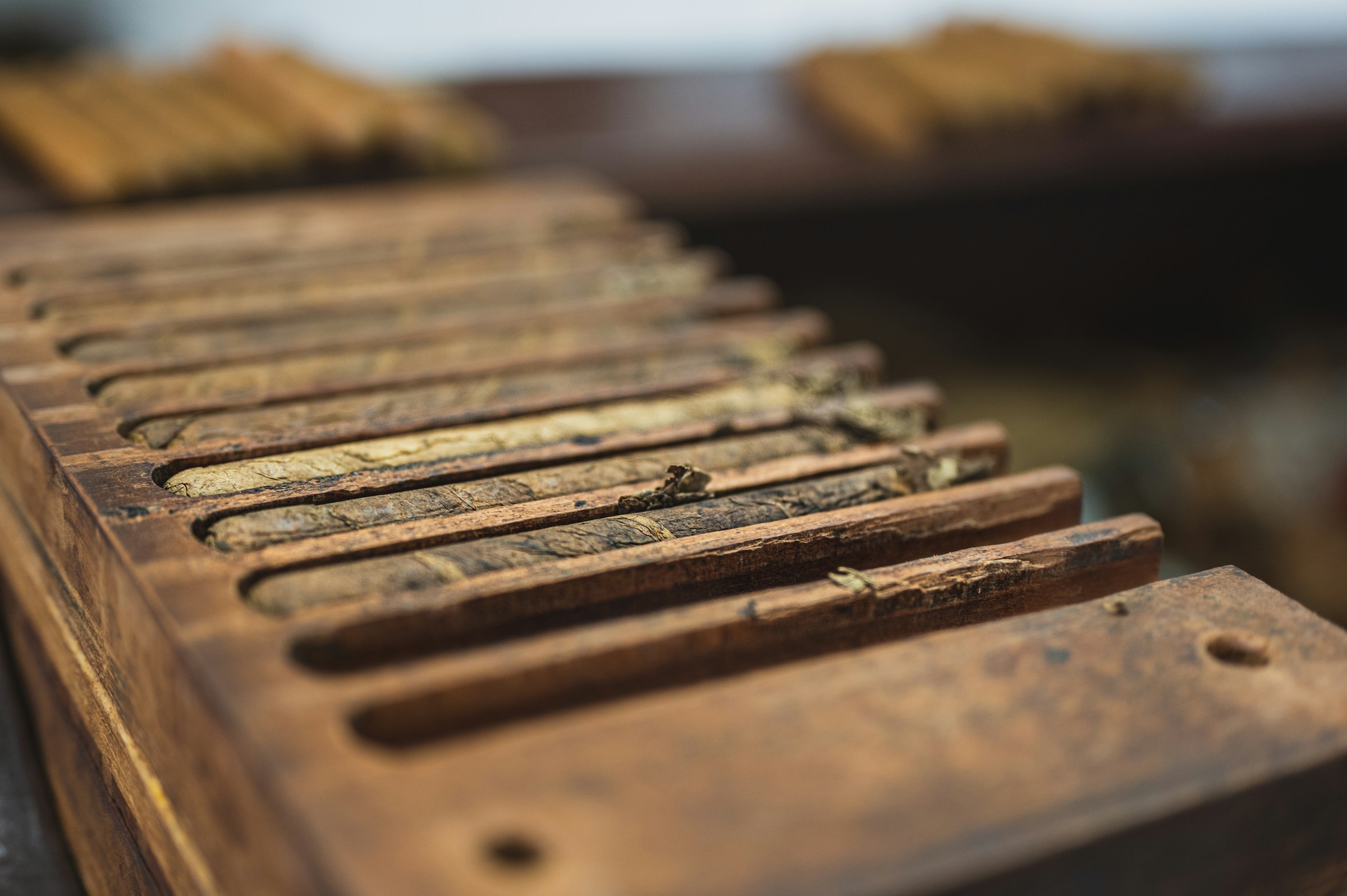
A mould receives a bunch that has already been formed by hand. The roller has already gathered the filler, distributed the ligero, seco, and volado, wrapped the binder, and shaped the tube by feel. The skill of the bunch has already happened. The mould shapes and holds what the roller has made. The roller is still the reason the bunch works, and the title of the job says as much. A cigar roller is called a cigar roller because the roller rolls the cigar. If a machine performs the roll, the title itself no longer describes what the worker is doing.
A Lieberman does the opposite. It takes loose filler and a binder leaf and mechanically forms the bunch itself. The tube that a skilled roller would have produced by feel is produced by the lever, the mat, and the compression bar. The skill of the roller, the years of training, the consistency in density and draw, is exactly what the machine is designed to make optional. That is why manufacturers turn to it.
The industry itself confirms the distinction. The four bunching methods, entubado, accordion, book, and Lieberman, are ranked by difficulty because bunching is where the skill lives. Moulds are not ranked, because a mould is not a bunching method.
The Hypocrisy of Bashing Cuban Cigar Construction
Cuban cigars receive persistent criticism for construction. The complaints usually centre on draw issues, uneven burn, and plugged cigars. What the criticism rarely acknowledges is that Cuba is the only country where premium cigars are, across the board, actually handmade.
Rollers in Cuba work solo, bunching and rolling the same cigar from start to finish, and the training required to reach a production standard takes years. Some of the draw and burn issues cited by critics are a real consequence of doing the hardest step of cigar construction by hand at scale.
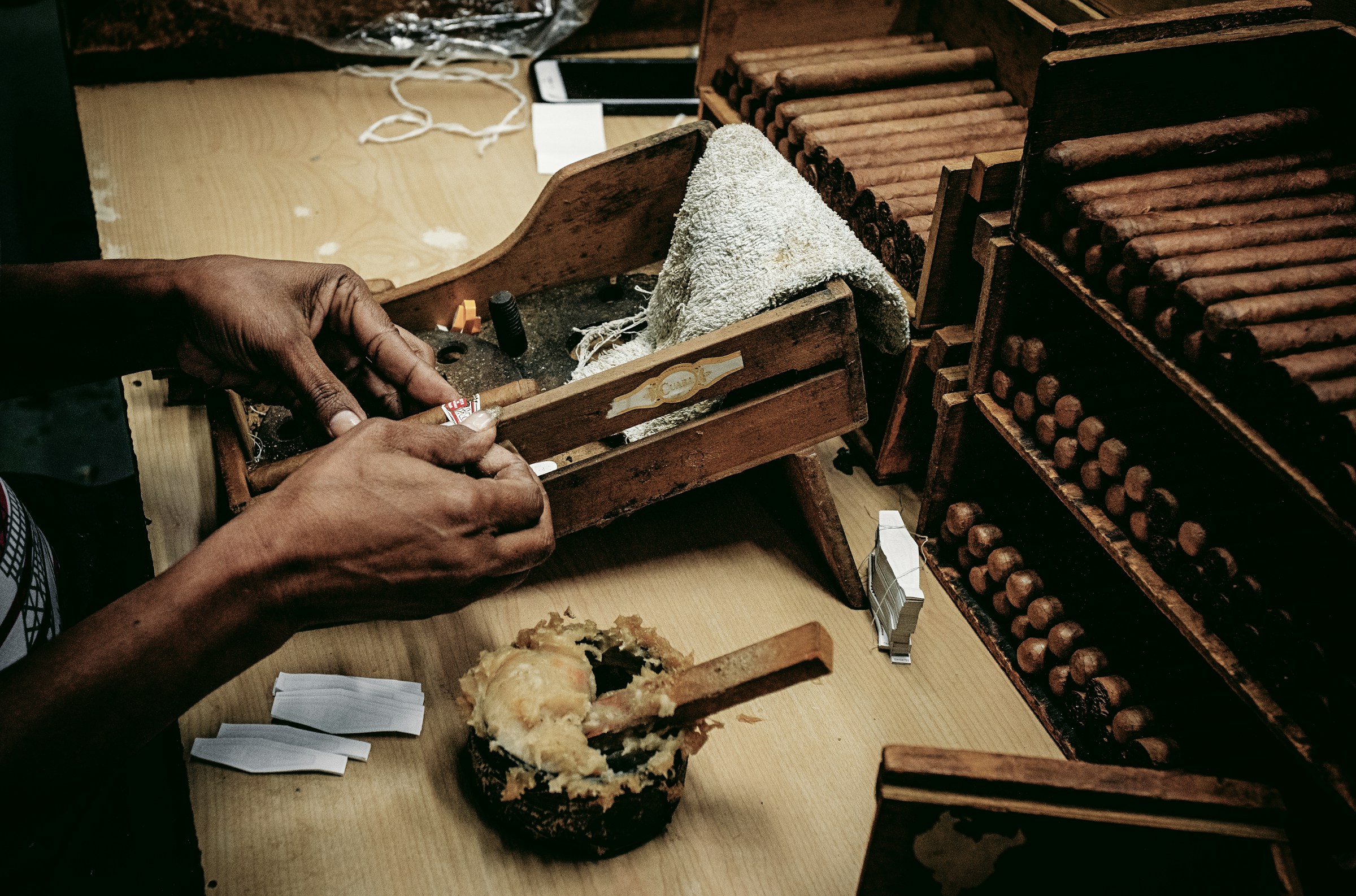
A cigar bunched by a Lieberman is measured against a cigar bunched by a person, and the machine wins on consistency, because that is what the machine is designed to do. Presenting the result as a fair comparison of quality, without accounting for the fact that only one of the two was made by hand, is where the criticism stops being fair.
The consumer sits at the end of this. A buyer who pays a premium for a handmade cigar is entitled to know what handmade means on the box. Cuba is the country still doing it the hard way. Criticising the results of that without naming it as such is the position that does not survive scrutiny.
Final Thoughts
Handmade matters because it is an appreciation of the craft and the skill of the person who actually made the thing. A handmade piece of furniture costs more than a machine made one because years of experience, judgement, and quality have gone into it, and the buyer is paying for that. Handmade shoes work the same way. So does anything else made by hand. The world has always understood the distinction, and premium cigars have always drawn their value from sitting on the right side of it.
Handmade products carry flaws. That is part of the charm, not a failing. A cigar made entirely by hand will have variation from stick to stick, and some of that variation is what a machine is designed to remove. The trade off is real. What you lose in consistency you gain in the fact that a person made it, and that person spent years learning how.
The luxury goods parallel makes the point at the other end. Certain fashion brands are alleged to manufacture the bulk of their product in China and then complete the finishing in Italy or France, so the final label can read Made in Italy or Made in France. The claim rests on the finishing step and ignores where the construction actually happened. A Lieberman bunched cigar works the same way. The bunching and rolling are the bulk of the cigar making process, and if the bunch is formed by a machine, describing the finished cigar as handmade rests on the same logic.
Using a Lieberman is a defensible commercial decision. Selling the result as handmade, at a handmade price, is not.